 ChatGPT
 Claude
 Perplexity
 Gemini
 Meet your local partner
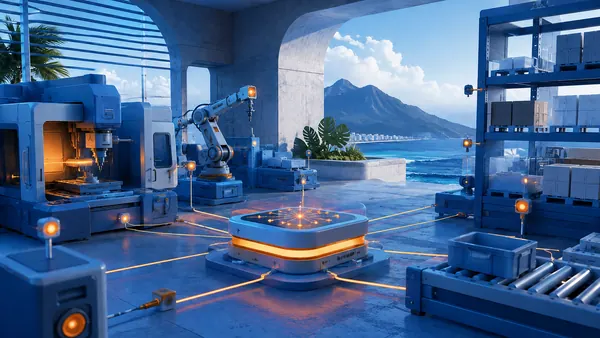

































































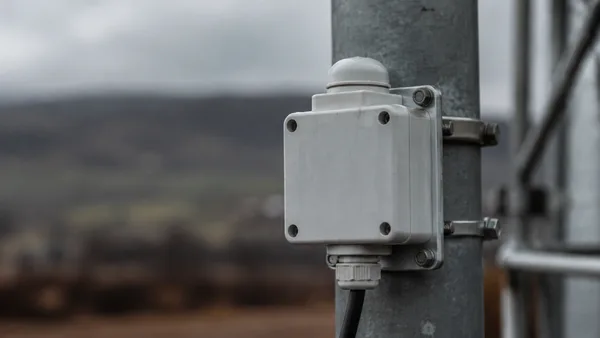


















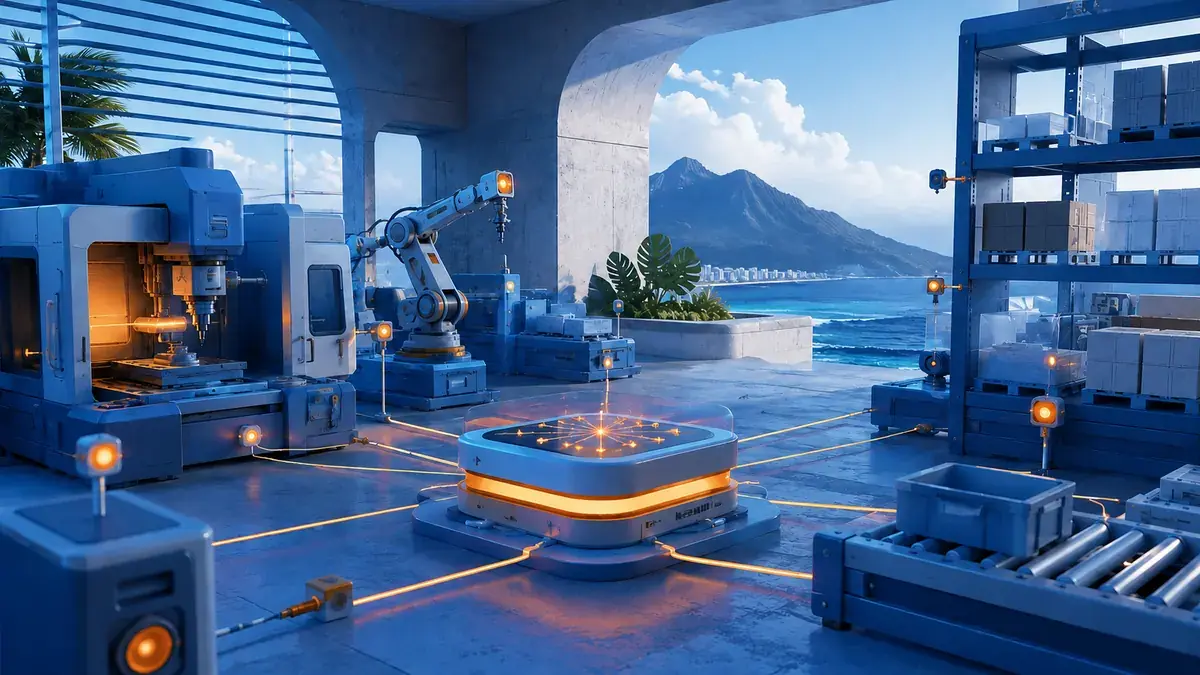
Manufacturing and commercial operations in Hawaii run on machinery, floor space, and physical inventory — but increasingly, they also run on data. Equipment sensors report performance in real time. Warehouse management systems track inventory across multiple sites. Security cameras, access control, and environmental monitoring all depend on a stable network connection. For an industry that used to think of "the internet" as something for the front office, connectivity has quietly become part of the production line itself.
As a facility adds connected equipment, reassess the network against measured application demand. Existing capacity may remain adequate; test it before assuming an upgrade is necessary.
Where Hawaii's Manufacturing and Commercial Operators Feel the Strain
The pressure points aren't uniform across every business, but a handful of patterns show up again and again across manufacturing, warehousing, and commercial facilities statewide.
Equipment monitoring generates more data than legacy networks expect
Modern industrial equipment increasingly ships with built-in sensors reporting temperature, vibration, throughput, and maintenance status. That's valuable data — it enables predictive maintenance and reduces unplanned downtime — but it also adds a steady stream of traffic that older facility networks were never designed to carry alongside everything else running on the same connection.
Supply chain visibility depends on uptime
When inventory management, shipment tracking, and vendor coordination use cloud-based platforms, connectivity becomes part of daily operations. When the facility's internet connection goes down, that visibility disappears with it — and for a commercial operator managing inbound freight on an island supply chain, even a short outage can cascade into missed shipments and delayed fulfillment.
Multi-site operations create fragmented vendor management
Operators running more than one facility — a production site and a separate warehouse, or locations spread across islands — often end up managing separate contracts, separate providers, and separate service levels at each address. That fragmentation makes it difficult to get a consolidated view of technology spend or to negotiate favorable terms anywhere.
Older industrial buildings weren't built for modern connectivity
Many manufacturing and warehouse facilities occupy older buildings not originally designed with structured cabling or modern wireless coverage in mind. Metal construction, large open floor plans, and thick concrete walls can create real dead zones for both Wi-Fi and cellular signal, directly affecting equipment that depends on consistent connectivity.
Operational technology and IT security don't always talk to each other
As production equipment becomes network-connected, it also becomes part of the facility's attack surface. Many commercial operators still treat operational technology (the equipment side) and information technology (the office side) as separate worlds, when in practice, an unsegmented network means a vulnerability on one side can expose the other.
What a Modern Manufacturing and Commercial Network Looks Like
None of the fixes here are exotic. The businesses that get ahead of these problems generally aren't running cutting-edge experimental technology — they're running a properly sized, properly segmented version of infrastructure that's been standard practice in other industries for years.
Dedicated, scalable bandwidth
Compare dedicated internet with business broadband using measured peak traffic, upload needs, repair commitments, and total cost. A committed circuit does not prevent internal congestion: backups, cameras, and production applications still need capacity planning and traffic controls.
Private cellular and industrial Wi-Fi for facility coverage
For large facilities with the kind of construction that creates wireless dead zones, private cellular networks or purpose-built industrial Wi-Fi can extend reliable coverage across the entire floor — including areas standard consumer-grade equipment can't reach.
IoT platforms for equipment and asset monitoring
A dedicated IoT management platform gives facilities a single place to monitor connected equipment, track assets across sites, and set up alerts for anomalies — rather than each piece of equipment reporting to a different, disconnected system.
Network segmentation between operational and information technology
Separating production equipment onto its own segmented network, distinct from office systems and guest access, limits how far a security issue on one side can spread and makes it easier to monitor for unusual activity on either side independently.
Redundant connectivity for business continuity
Given the added cost and complexity of restoring connectivity after an outage in an island environment, a secondary failover connection — even at reduced bandwidth — is often the difference between a brief disruption and a full production stoppage.
Illustrative Scenario: The Growing Distribution Operation
Consider this hypothetical example for Hawaiʻi commercial operators: a distribution business that has grown from a single warehouse to two facilities, adding barcode scanning, an updated inventory management platform, and a handful of environmental sensors to monitor temperature-sensitive inventory along the way. Each addition got connected to whatever network happened to be available at the time, without anyone stepping back to evaluate whether the underlying infrastructure could actually support all of it reliably.
The result, typically, is a network that works — most of the time. Inventory syncs are occasionally delayed. Wi-Fi coverage has dead spots in the back of the warehouse. And when a connection does go down, there's no backup, and no single vendor to call who understands the whole picture.
A proper modernization in this scenario usually starts with a site assessment at each facility to understand what's actually causing coverage gaps, followed by a bandwidth analysis based on real usage patterns rather than guesswork. From there, a segmented network design separates equipment and inventory systems from general office traffic, a backup connection is put in place for continuity, and — critically — both facilities move under a consolidated set of contracts with a single point of accountability instead of two separately managed vendor relationships.
Why Multi-Provider Guidance Matters for Manufacturing and Commercial Operators
Assign responsibility for technical evaluation, whether internally or with a qualified partner. Include operations staff when reviewing production dependencies.
A multi-provider advisory approach starts from a different place entirely: an honest assessment of the facility's actual requirements — square footage, equipment load, growth plans, and existing contract terms — before comparing available providers against those requirements. That comparison covers not just monthly cost, but contract flexibility, service-level commitments, and what happens when something goes wrong. The advisor helps compare proposals and coordinate the transition, rather than leaving that burden on an already-stretched operations team.
Confirm availability and construction details in writing for the specific site. Neither a local contact nor a national coverage claim replaces an address-level qualification.
Steps to Modernize Your Facility's Connectivity
- Map every connected system. List equipment sensors, inventory platforms, security systems, and office traffic all running on the current network, and note where they overlap.
- Walk the floor for dead zones. Identify areas with unreliable Wi-Fi or cellular coverage, especially near equipment that depends on constant connectivity.
- Separate operational technology from office IT. If production equipment and office computers share the same unsegmented network today, treat this as a priority fix.
- Size bandwidth to peak load, not average load. Evaluate capacity based on your busiest production day or highest simultaneous system usage, not a quiet afternoon.
- Build in redundancy. Determine what a connectivity outage would cost your operation, and weigh that against the cost of a backup connection.
- Consolidate multi-site contracts. If you operate more than one facility, get a consolidated view of spend and service levels across all of them before renewing anything individually.