 ChatGPT
 Claude
 Perplexity
 Gemini
 Meet your local partner





















































































Walk into almost any restaurant, boutique hotel, or hospitality-driven small business in Hawaii today, and you'll find a quiet dependency running underneath everything: the network. Point-of-sale systems, reservation platforms, guest Wi-Fi, kitchen display screens, phone systems, and increasingly, IoT-connected equipment all rely on the same underlying connectivity. When it holds up, nobody notices. When it doesn't, a Friday dinner rush turns into a line of frustrated guests and a staff scrambling to process payments by hand.
For hospitality operators across Oahu, Maui, the Big Island, and Kauai, this dependency has become more pronounced — and more fragile — over the past several years. Guest expectations have risen. Cloud-based point-of-sale and reservation systems depend on reliable connectivity. And the seasonal nature of Hawaii's visitor industry means bandwidth demand can swing dramatically between a quiet Tuesday in October and a packed Saturday during peak tourist season. Add in Hawaii's unique geography — island infrastructure, higher build costs for new fiber runs, and limited competition in some areas — and it becomes important to compare current capacity, address-level availability, and backup options against the property's actual workload.
The Connectivity Challenges Unique to Hawaii Hospitality
Every industry has its own relationship with technology, but hospitality carries a specific set of pressures that make connectivity decisions higher-stakes than they might be for, say, a professional services firm.
Guest-facing Wi-Fi is now a service expectation, not a perk
Assess guest Wi-Fi using property feedback, peak demand, and coverage tests. Avoid assuming it affects every guest’s buying decision in the same way.
Point-of-sale and payment systems can't afford downtime
Cloud-connected POS systems may be disrupted by an outage. Confirm whether your payment platform supports offline processing and the limits and risks of that mode.
Seasonal demand creates bandwidth planning headaches
Review peak traffic from the property’s own records rather than sizing solely for an average day.
Multiple locations mean multiple vendor relationships
Separate contracts can make comparison harder. Maintain a location-by-location inventory before deciding whether consolidation improves cost or service.
Island geography limits provider options in some areas
Not every property in Hawaii has the same menu of connectivity options. Fiber build-out, fixed wireless coverage, and dedicated internet availability vary significantly by location, and older buildings — particularly in historic or rural areas — may face additional constraints. Knowing what's actually available at a specific address, rather than assuming a national provider's coverage map tells the whole story, is often the first real hurdle.
What a Modern Hospitality Technology Stack Looks Like
The good news is that the fundamentals of a resilient hospitality network aren't complicated — they're just often assembled poorly, one purchase at a time, without an overall strategy. A well-built stack for a Hawaii hospitality business typically includes several core layers working together.
Dedicated or business-grade fiber internet
Dedicated internet may provide committed capacity and service-level terms, depending on the agreement. Compare these terms with business broadband against your actual workload. Application performance also depends on Wi-Fi, equipment, upstream services, and backup power—not bandwidth alone.
Segmented, managed guest Wi-Fi
Guest Wi-Fi should run on its own segmented network — separate from POS systems, back-office computers, and any payment infrastructure. This isn't just about giving guests a good experience; it's a basic security practice that keeps a guest device on the network from directly accessing payment systems when segmentation is configured and verified correctly.
Cloud-based unified communications
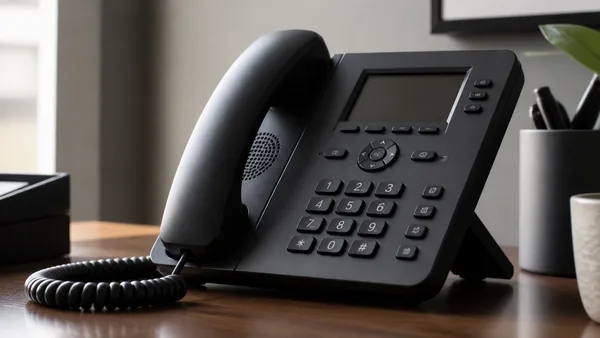
A modern phone system does more than answer calls. Cloud-based communications platforms can route calls to a manager's mobile device during a rush, provide visibility into missed reservation calls, and integrate with messaging tools — all without the business needing to maintain on-premises phone hardware.
Network security appropriate to payment processing
Any business processing card payments has an obligation to keep that data secure, and a properly segmented, monitored network is a foundational part of meeting that obligation — not an optional add-on.
Backup connectivity for business continuity
Given Hawaii's exposure to storms and the occasional infrastructure disruption that comes with island geography, a secondary connection — even a lower-bandwidth failover — can be the difference between staying open during an outage and closing the doors.
Illustrative Scenario: The Family-Owned Restaurant Outgrowing Its Setup
Consider this hypothetical hospitality example: a family-owned restaurant, in business for decades, built its original technology setup years ago around a single internet connection and a basic phone line. As the business grew — adding online ordering, a loyalty app, and a second dining room — that original setup never got revisited. It simply absorbed more and more demand until performance during peak hours became unreliable.
In situations like this, the challenge usually isn't a lack of options — it's the opposite. Ownership is often presented with competing pitches from multiple carriers and vendors, each with different terminology, different pricing structures, and different claims about what will fix the problem. Without a technical background or the time to evaluate each option properly, many operators either delay the decision indefinitely or default to whichever vendor is easiest to reach, regardless of fit.
The goal is a tested setup that supports the defined peak workload. Results depend on the design, service, configuration, and ongoing maintenance.
Why Multi-Provider Guidance Matters in This Process
If internal staff cannot evaluate the options, assign a qualified technical reviewer. Compare proposals against documented needs rather than relying only on a sales presentation.
A multi-provider advisory approach flips that dynamic. Instead of starting with a single provider's product catalog, the process starts with the business's actual requirements: how many locations, what's the peak-demand profile, what's the existing contract situation, and what's actually available at each address. From there, available options across multiple carriers and providers get compared against those requirements — cost, reliability, contract terms, and support quality — and the advisor helps review proposals and coordinate next steps.
Confirm availability and construction details in writing for the specific site. Neither a local contact nor a national coverage claim replaces an address-level qualification.
Steps to Modernize Your Hospitality Business's Connectivity
- Audit what you currently have. List every internet connection, phone line, and contract across every location, including renewal dates and current monthly cost.
- Identify your actual peak-demand pattern. Look at your busiest hour, busiest day, and busiest season — not your average day — when evaluating whether current bandwidth is sufficient.
- Separate guest and operational networks. If guest Wi-Fi and POS systems are running on the same network today, this is a priority fix, not a nice-to-have.
- Compare providers against the same requirements. Get real, comparable quotes across multiple carriers for your specific address before renewing or upgrading anything.
- Plan for continuity. Ask what happens to your operations during an outage, and whether a backup connection makes sense for your risk tolerance.
- Consolidate vendor relationships where possible. Fewer contracts and points of contact make ongoing management dramatically simpler.